Local SEO: The Weekly Google Business Profile Routine Printers Ignore

If your phones aren’t ringing as they should, and a competitor keeps showing up ahead of you on Google Maps, it’s probably not your pricing or your print quality. It’s visibility. Local SEO is won or lost on small, consistent signals, and one of the most overlooked is your Google Business Profile. Most printers set it up once… then forget it. Meanwhile, Google favors the shops that look active, accurate, and trustworthy right now. The good news? You don’t need a big, elaborate plan. You need a weekly Google Business Profile routine you can actually keep up with. You’re Losing “Near me” Jobs Without Knowing It When someone searches “printing near me,” they’re not researching for fun. They’re ready to buy. If your Google Business Profile shows outdated hours, old photos, no recent posts, or missing services, Google (and customers) take that as a signal. And they move on, often to the shop across town that looks more active, even if they’re not better printers than you. This isn’t a skill problem. It’s a consistency problem. What a Google Business Profile Is (And What It Isn’t) Your Google Business Profile (GBP) is your storefront on Google Search and Google Maps.
Year-End Website Tune-Up for Printers: 7 Quick Wins Before January
If someone discovers your print shop for the first time, there’s a good chance they’re not walking through your front door. They’re finding you online. That’s why your website matters just as much as the beautiful job you just shipped. But for a lot of printers, the website is “that thing we’ll fix someday” while presses, people, and deadlines scream louder. If your site feels a little tired, a little out of date, or you’re simply not sure it’s helping you sell more printing, don’t beat yourself up. Many shops are in the same place. The good news: a simple year-end website tune-up for printers can make a real difference. You don’t need to rebuild everything. You just need a focused list of quick wins you can knock out before the ball drops. Why Year-End Is the Best Time to Fix Your Website You already think in seasons: back to school, holidays, trade shows, slow spells. The end of the year is when you naturally take stock, clearing out the shop, wrapping up invoices, reviewing the numbers, and planning for next year. Your website deserves a spot on that list. A short tune-up now helps you look more current and
Don’t Underestimate the Benefits of Blogging for Your Print Business

This blog can be summed up in one thought: Don’t underestimate how many times print buyers will land on your website, click around for a minute, and then disappear without contacting you. It happens every day. And it’s not a bad thing. Prospects aren’t always ready to place an order yet. And that’s okay. Sometimes, they’re looking for answers. And if your website isn’t answering their questions, they’ll find another printer who will. That’s where blogging (and website content) comes in. It’s common to hear printers say things like, “We don’t need all this content. We just need to sell printing. Amazon doesn’t blog, and they’re doing fine.” But here’s the difference: Amazon sells to consumers (B2C). Most printers are selling to other businesses (B2B). And in B2B, content isn’t optional: it’s the fuel that builds trust, answers questions, and creates confidence before a sale ever happens. Blogs Position You as the Print Expert When your buyers are unsure what kind of mailer will work best for their campaign, where do they turn first? Google. If your blog answers their question, you’ve already earned trust before they even contact you. Research shows that companies that blog get 55% more website
Marketing Is a Muscle (and Printers Can’t Afford to Let It Weaken)

Ever tried to get back to the gym after months away? The first workout feels like starting from scratch. Muscles that used to feel strong are sluggish. Progress is slower. Motivation is harder to come by. Marketing works the same way. Many printers hit pause and put marketing on the back burner when things get busy, when money feels tight, or when they assume one big push will cover them for months. But just like skipping workouts, stopping your marketing means you lose the strength you’ve built. And the longer you stay away, the harder it is to rebuild. “People often say motivation doesn’t last. Neither does bathing—that’s why we recommend it daily.” – Zig Ziglar What Happens When You Let Your Marketing Muscle Rest Too Long Think about what happens when you stop working out. At first, you don’t notice much. But over time, your strength fades, your endurance drops, and the progress you made slips away. Marketing is no different. Your audience drifts. Clients have short memories. If you stop showing up, they don’t wait around. They fill the silence with someone else’s voice. Maybe it’s a competitor’s postcard in their mailbox, or another shop staying active on
Are You Still Playing “Kick the Can” with Your Printing Business Pricing?

Remember the childhood game of “kick the can”? It was fun, simple, and easy. You’d kick a can down the street, pushing the challenge just a little further ahead, never truly resolving it, just postponing the inevitable. But when you’re running a printing business, playing “kick the can” with your pricing strategy isn’t fun; it’s risky. Why Traditional Pricing Feels Comfortable (But Isn’t) Many printers rely on gut instincts and legacy methods to price their services. It feels comfortable. You know your clients, you know your business, and you think you know your costs. But the reality is often different. You’re frequently pricing based on assumptions or guesses, not facts. And when uncertainty creeps in, you instinctively compensate by inflating costs in areas you believe are already covered. You’ve effectively kicked the can a little further down the road. You haven’t solved your pricing discomfort; you’ve just displaced it somewhere else. The Real Problem: Avoiding the Uncomfortable Truth Let’s face it. The reason you’re increasing the perceived cost of something you’re already confident about is that there’s another area in your pricing you’re less certain of. Maybe it’s labor, maybe it’s materials, maybe it’s overhead. You have a sense that
How to Help Your Print Buyers Send Print-Ready Files Every Time

You’ve been there: a new order comes in, the deadline is tight, and the file? Not quite ready. Whether it’s missing bleeds, fuzzy images, or font issues, file prep problems can slow everything down and create more stress than they should. The good news? You can head off most of those headaches by giving your print buyers a little help without piling more work on your plate. Here are four practical ways to set them up for success. 1. Share Common File Prep Pitfalls Not every client knows what goes into a production-ready file, and that’s OK. A simple, printer-approved checklist can make a big difference. That’s why we put together a free guide on the most common file prep mistakes. It’s an easy win: give your customers the info upfront, and you’ll both save time later. >> FREE DOWNLOAD: Top 7 File Prep Mistakes 2. Offer Setup Support That Scales If your clients design their own pieces, you know how often things like margins, trim areas, and safe zones get overlooked. That’s where artwork layout templates can help. Available as a website add-on, these downloadable templates (branded with your company’s logo) include clear design boundaries for popular products and
Trust Builders For Printers: 8 Website Details That Help You Win Big Clients

What makes a high-value customer say, “Yep, this is my printer”? You could have the best pricing, stellar turnaround, and years of experience, but if that trust doesn’t come across on your website, the sale might not either. And for your dream clients, the nonprofits, schools, manufacturers, and marketing teams you really want, your website is the first sales call. So let’s make sure it’s pulling its weight. Why Trust Details Matter More Than Ever When print buyers visit your website, they’re often thinking: “Can I trust this company to do what I need, on time, without making me look bad?” They’re not looking for bells and whistles. They’re looking for signals—visual, verbal, and structural—that show your shop is experienced, approachable, and built to deliver. The 8 Trust Builders Your Website Can’t Afford to Miss 1. Clear, Clickable Navigation Your website’s navigation should feel like second nature. A first-time visitor should be able to land on your home page and know within seconds what you do, what to click next, and how to place an order. If your website is crammed with vague or internal-facing terms, simplify it. Use buyer-friendly language like “Order Printing,” “Request a Quote,” or “What We
Why Linking Directly to Vendor Sites Hurts Your Print Business (And What to Do Instead)

Imagine this: a print buyer lands on your website, curious about your promotional products. They click a link… and suddenly, they’re not on your site anymore. They’re in a completely new environment with unfamiliar branding and no clear reminder of you. This kind of abrupt shift is more common than you might think. Many printers link directly to vendor platforms like Sage, ASI, Carlson Craft, or DisplayCity. It’s fast. It’s easy. And it’s quietly working against you. Losing the Visitor Too Soon It’s not the act of linking out that’s the problem—it’s when and how it happens. If someone clicks off your website right after arriving, without taking in who you are, what you offer, or how to come back, you’ve lost control of their experience. This kind of early exit leads to: Higher bounce rates Lower engagement signals (like time on site or page views) Decreased search engine visibility Worse, it’s a missed opportunity to build a relationship. You brought them in, but then sent them away before they really saw you. A simple change, like adding a transitional landing page, keeps them engaged a few moments longer. That time matters. It helps your visitor feel anchored to your
Why You’re Not Getting More Print Orders (Even Though Your SEO Is Working)

The Honest Truth About What SEO Really Does (And What Comes Next) If you’re a print shop owner who’s paying for SEO and not seeing an uptick in print orders, you’re probably asking yourself: “Is this even working?” And that’s a fair question. In fact, it’s the right question. Because if you’re investing in something, you should understand what it’s supposed to do—and what it’s not supposed to do. So, let’s talk about it. What Does SEO Actually Do? At its core, SEO does one thing really well: It makes your website more visible. Think about Google like a highway. SEO puts up more road signs for your print shop so drivers (aka your potential print customers) can find you. That means when someone searches “custom postcards near me” or “EDDM for restaurants,” your website is more likely to show up. But here’s the kicker… Visibility doesn’t equal sales.It equals opportunity. What you do with that opportunity is where most businesses—printers included—get stuck. So… If SEO Is Working, Why Aren’t You Getting More Orders? Because the job of SEO is to get more people to your site. The job of your website—and your overall marketing—is to convert and convince them.
What is a Reorder Forms Library, and How Does It Benefit Your Print Shop?

If you’ve been following us for a while, you’ve likely heard about the Reorder Forms Library (ROFL), but you may still have questions. Is it the same as a standard reorder process? How does it work? And most importantly, what’s in it for you and your clients? Well, your answers await below! What is the Reorder Forms Library? The Reorder Forms Library is a website add-on that creates a personalized, hassle-free experience for your repeat print buyers through Private Order Forms. It stores all the details of their frequently ordered jobs—such as brochures, business cards, or postcards—and organizes them into private, client-specific forms. These forms allow you to offer tailored pricing and eliminate unnecessary steps in the ordering process. Instead of navigating through generic forms or manually re-entering job specs, print buyers can quickly reorder what they need with just a few clicks. Why not just use the standard reorder process on my website? This is a common question, and the answer lies in personalization and efficiency. While your website’s standard reorder option allows clients to place repeat orders, it doesn’t customize the experience for their unique needs. The Reorder Forms Library goes a step further by: Tailoring forms specifically
The MI4P Process
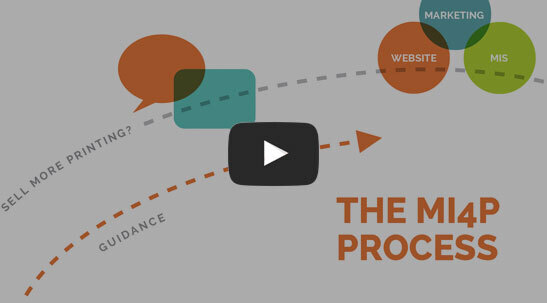
This two-minute video will show you how we take you through Our Proven Process. No surprises; no bumps in the road!
It's worked for hundreds of printers just like you; it will work for you, too! Download the MI4P Proven Process PDF below, and follow along.
PDF: The MI4P ProcessSay Hello
"*" indicates required fields
Who We Are
What We Do
Marketing Ideas For Printers
5990 14th Street South
Fargo, ND 58104
(701) 241-9204 (800) 736-0688
© 2026 Marketing Ideas For Printers
Our Privacy Policy | Terms of Service