Rebuilding Community Through Vibrant Local Businesses

In her book, The Death and Life of Great American Cities, Jane Jacobs writes about the relationship of locally owned businesses and community. Here’s what she observes about the power of small, daily interactions: (Community) “grows…out of people stopping by…, getting advice from the grower and giving advice to the newsstand man, comparing opinions with other customers at the baker and nodding hello to the two boys drinking pop on the stoop…Most of it is ostensibly utterly trivial, but the sum is not trivial at all. The sum of such casual, public contact at the local level…is a feeling for the public identity of the people, a web of public respect and trust, and a resource in time of personal or neighborhood need. The absence of trust is a disaster to a city street.” The Hidden Costs of Absentee Ownership The July edition of our Local Edge direct mail postcard focuses on the importance of local business and its impact in the community it resides. While our global economy has its perks, often a decrease in independent business owners brings a loss of personal investment in the community itself. Research consistently reveals that absentee-owned companies result in hidden costs: depressed
Be Prepared for the Next Phase of the Canadian Anti-Spam Law

Back in December 2010, Canada passed a sweeping anti-spam law that entered into force on July 1, 2014. The super-short version of the law that’s important to our Canadian printers is this: Before sending any electronic messages, you are required to have the consent (permission) of the recipient. (Note that “electronic messages” means more than email; it also includes messages sent to social networking accounts and text messages sent to a cell phone.) At this point, you may be thinking, “It’s 2017, and this is old news. Why are you telling me this now?” Well, although you may already be aware of the law, what you may not be aware of is that this new law is wrapping up a “breaking in” period of three years, with the full force of the law taking effect this summer. Starting July 1, 2017, individuals or organizations affected by those violating the law will be able to pursue court actions to seek actual and statutory damages (up to $1 million for individuals, and $10 million for business). Some Quick Tips To make sure you’re prepared, here are some quick tips to help you navigate Canada’s anti-spam law: If you obtained express consent from your recipient before the law went into effect
The MI4P Process
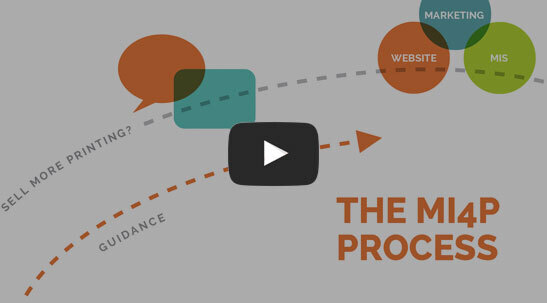
This two-minute video will show you how we take you through Our Proven Process. No surprises; no bumps in the road!
It's worked for hundreds of printers just like you; it will work for you, too! Download the MI4P Proven Process PDF below, and follow along.
PDF: The MI4P ProcessSay Hello
"*" indicates required fields
Who We Are
What We Do
Marketing Ideas For Printers
5990 14th Street South
Fargo, ND 58104
(701) 241-9204 (800) 736-0688
© 2026 Marketing Ideas For Printers
Our Privacy Policy | Terms of Service