Some Printers Left NPSOA’s Spring Leaders Summit With Ideas. Others Left With a Plan.
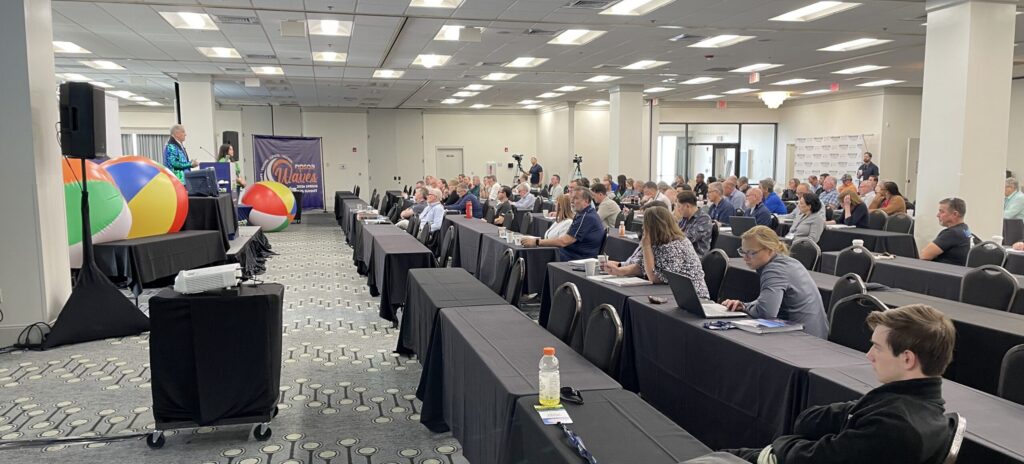
Some printers left the 2026 National Print and Sign Owners Association (NPSOA) Spring Leadership Summit with a notebook full of ideas. Others left with a clear plan for what they were going to implement first. By the time you read this, that difference is already starting to show. The printers with a plan are putting something into motion. For many, that next step now includes figuring out how to use AI to get real work done in their print business. The rest are back in the day-to-day, putting out fires and trying to figure out where to start. That moment—right after the conference, when everything feels clear and possible—is exactly what this slide addressed during the workshop, Copy, Paste, Win! AI Workflows for Printers. What happens next determines whether those ideas turn into results, or fade back into the background. That Same Divide Is Showing Up with AI That same divide is starting to show up in how printers are approaching AI. The difference isn’t effort. It’s structure. Without structure, ideas fade. With structure, they turn into results. Some are already using AI with structure — completing real work, moving faster, and building repeatable processes they can rely on. Others
The Future of Print + AI: Why Early Movers Will Win: Part 8 of the AI Success Journey for Printers

Stepping Back to See the Whole Picture Over the last several months, we’ve followed Clay Morgan from the moment AI first caught his attention to the day it became part of his shop’s everyday rhythm. Along the way, he went from experimenting in quiet moments to equipping his team with repeatable workflows. He discovered that AI isn’t just a tool for speed; it’s a catalyst for clarity, connection, and leadership. Now, Clay pauses to reflect. And the view looks different from here. A Quiet Evening in the Shop The lights were still on, but the shop had gone still. Jess had left early to take her son to a school event. Rick had closed up the delivery van an hour ago. Even the presses, freshly cleaned and reset for Monday, sat in patient silence. Clay walked the floor slowly, letting himself notice what he might usually overlook. There was the production schedule pinned on the back wall, a layout that had started as a rough AI-generated draft before Rick made it his own. A stack of reorder notes sat neatly on Jess’s desk. Some of the emails had come from an AI workflow they’d created weeks ago, now running quietly
NPSOA 2026 in Myrtle Beach: A Printer’s Game Plan for Going from Busy to Intentional
Myrtle Beach, South Carolina | March 19–21, 2026 If you run a print or sign shop, your days are usually spoken for before you even unlock the front door. Press checks. Artwork changes. That rush job your best customer “forgot” to mention yesterday. Somewhere in there, you’re also supposed to think about sales, marketing, AI, your website, and whether your workflow is as efficient as it could be. No wonder it’s hard to step away for a conference. That’s exactly why the 14th Annual NPSOA Leaders Summit in Myrtle Beach is so valuable. It’s three days designed specifically for owners and leaders of independent print and sign shops like you to step back from the daily whirlwind and get intentional about how you’ll grow in 2026. And yes, we’ll be there. Marketing Ideas For Printers will be on-site, sharing real-world ways to put AI to work in your shop and connecting the dots with your website, workflow, and ongoing marketing. Why the 2026 NPSOA Leaders Summit Is Worth Leaving the Shop For Let’s be honest: it’s not easy to leave the shop, even for a couple of days. But the NPSOA Leaders Summit is designed to make that time pay
Overcoming AI Resistance in Your Team: Part 7 of the AI Success Journey For Printers

When progress creates pressure Over the past several months, we’ve seen how AI has helped Clay reclaim time, improve workflows, and reawaken growth opportunities. But now the challenge shifts. Even though results are starting to show, not everyone is comfortable with how fast things are changing. In this phase of the journey, Clay has to do something even harder than learning a new tool: lead through discomfort with empathy and clarity. The breakroom moment It was a throwaway comment, but one Clay couldn’t ignore. He had just stepped into the breakroom to refill his mug when he caught the end of a conversation between Jess and Rick. They were standing near the fridge, talking in low voices. Rick said it loud enough for Clay to hear: “It’s like we’re being told to act like computers. That’s not why I got into printing.” Jess didn’t respond, at least not before Clay walked in. Rick saw him, nodded a quick hello, and left with his coffee. No confrontation. Just tension, hanging in the air. A quiet check-in Later that day, Clay asked Rick if they could talk. They sat in Clay’s office, door open but tone casual. “Hey,” Clay said, “I overheard a
AI for Business Growth: Seeing the Opportunities Hiding in Plain Sight: Part 6 of The AI Success Journey for Printers
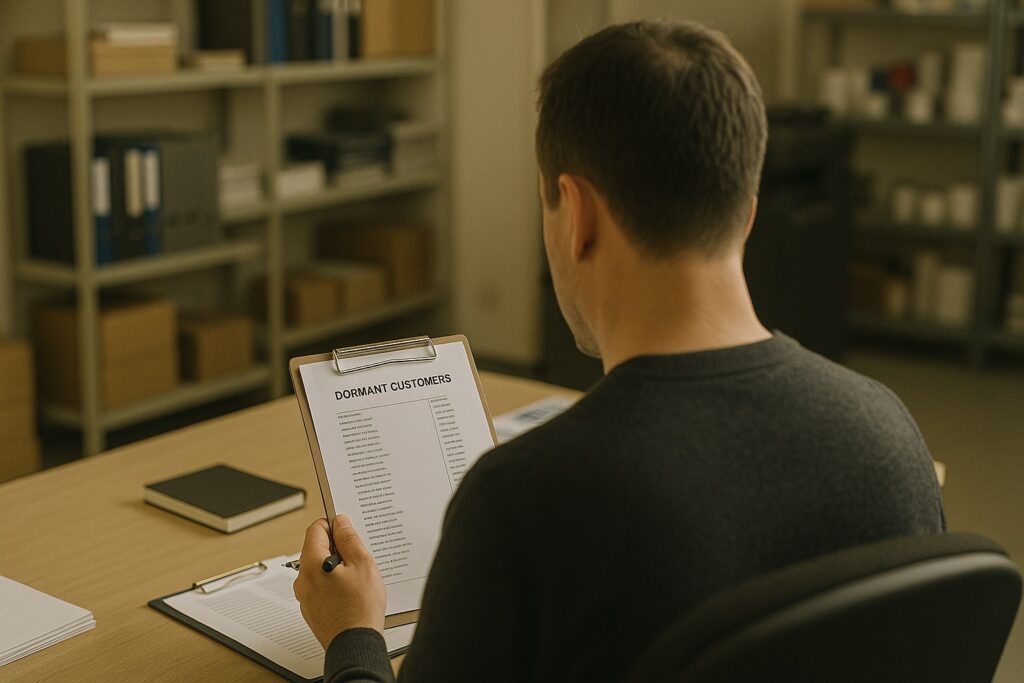
From efficiency to opportunity Over the past five months, we’ve seen Clay take AI from theory to practice, and then from practice to habit. He’s tested simple use cases, built confidence, and brought his team along for the ride. Now, those small wins are becoming systems. What started as one-off experiments is turning into workflows that support real momentum. This month, something shifts again. Clay stops asking, “How can we work more efficiently?” and starts asking, “Where could we grow?” That’s when AI moves from operational support to strategic guidance. A rare lull and a curious question It was a Wednesday morning that felt… strange. No fires to put out. No rush jobs dropped in at the last minute. The front desk was calm. The install team was out early. Even the pressroom, usually alive with noise and motion, had settled into a quiet rhythm. Clay poured a second cup of coffee and did something rare: he stood still. We’ve got capacity today, he thought. Not just in production, but in attention. Mental space. Breathing room. It wasn’t a luxury he was used to. And he didn’t want to waste it. He walked back to his office and opened a tab he
AI for Production and Workflow Efficiency: Part 5 of The AI Success Journey for Printers
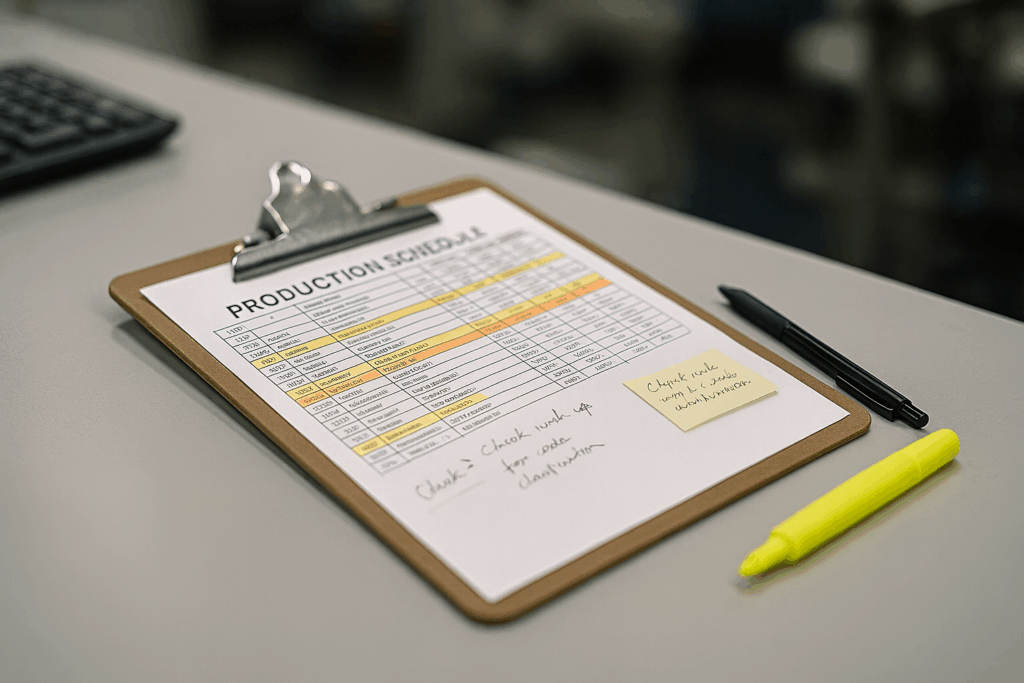
From curiosity to integration Over the past few months, we’ve watched Clay’s journey with AI move from curiosity to capability. He’s tested simple use cases, built confidence, and brought his team along for the ride. Now, those small wins are becoming systems. What started as one-off experiments is turning into workflows that support real momentum. In this chapter of the journey, Clay sees how AI can reduce friction in production, quietly improving the rhythm of the workday. “If we had five more minutes…” It was a passing comment. Rick probably didn’t even mean anything by it. They were walking through the back after a morning install update when he said it: “If we had five more minutes every day, we’d be ahead instead of behind.” Clay nodded. He’d heard versions of that phrase before. The details changed—different job, different delay—but the feeling was always the same: there’s just not enough time to get ahead. That afternoon, Clay sat in his office, staring at next week’s production list. Same mix of projects. Same order flow. Same tight window. We’re not short on people, he thought. We’re short on space: in our day, in our process, in our heads. He opened his laptop, and for
You’re Not Getting Replaced, You’re Getting Ready: Part 4 of The AI Success Journey for Printers
From Curiosity to Conversation If you’ve been following Clay’s story for the last few months, you’ve seen how his first experiment with AI gave him something every print shop owner needs—confidence. But confidence isn’t enough. If a business is going to grow, change has to become a conversation. This month, in part 4 of The AI Success Journey for Printers, Clay starts talking with his team about AI… and finds out what they’re really thinking. “Let’s Talk About AI” Monday morning at Riverbend Print & Sign started like any other: coffee, install updates, a quick recap of orders going to production… but then Clay did something new. “Before we wrap up this meeting, there’s one more thing I want to talk about,” he said. “Let’s spend a few minutes on AI.” The room shifted. Jess glanced at Rick. Rick looked down at his notes. Someone exhaled a little too loudly. Maybe this was a mistake, Clay thought. They’re already picturing robots in the breakroom. But he kept going. Calm. Measured. “Last week, I used a free AI tool to help write a follow-up email to a customer who hadn’t responded. That one message turned into something I’m now doing regularly—a simple
What AI Can (and Can’t) Do for Print Shops: Part 3 of the AI Success Journey For Printers
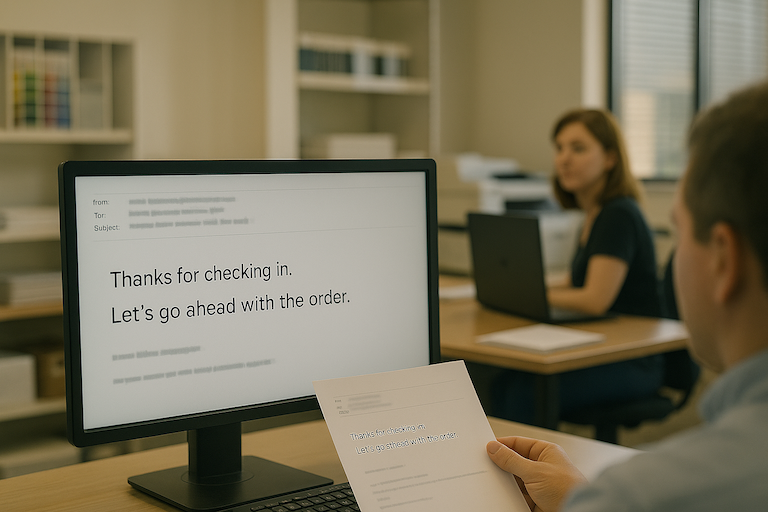
Start small. Start safe. See what happens. Clay’s not diving into the deep end. He’s not trying to overhaul his whole business. He’s just doing what I recommend every printer do when they’re curious about AI: start small, start safe, and see what happens. Let’s continue with Part 3 of Clay’s story. A blank screen and a blinking cursor It was a quiet Saturday morning at Clay Morgan’s house. The shop was closed. His wife was out running errands. And Clay was sitting at the kitchen table, laptop open, coffee in hand. He stared at the prompt box on a free AI tool he’d bookmarked weeks ago. What am I even supposed to ask this thing? He thought about the customer who had gone silent after receiving a quote for two, 4’x8’ signs. Nothing unusual. But still, it bothered him. Okay, let’s keep it simple, he muttered, and typed: “Write a follow-up email to a customer who hasn’t responded in two weeks.” The tool responded almost instantly with a perfectly formatted email. Dear Valued Customer, We hope this message finds you well… Clay squinted at the screen. I’d never send that. It was professional, sure. But it didn’t sound like him.
When “Fine” Starts to Feel Like Falling Behind: Part 2 of the AI Success Journey For Printers

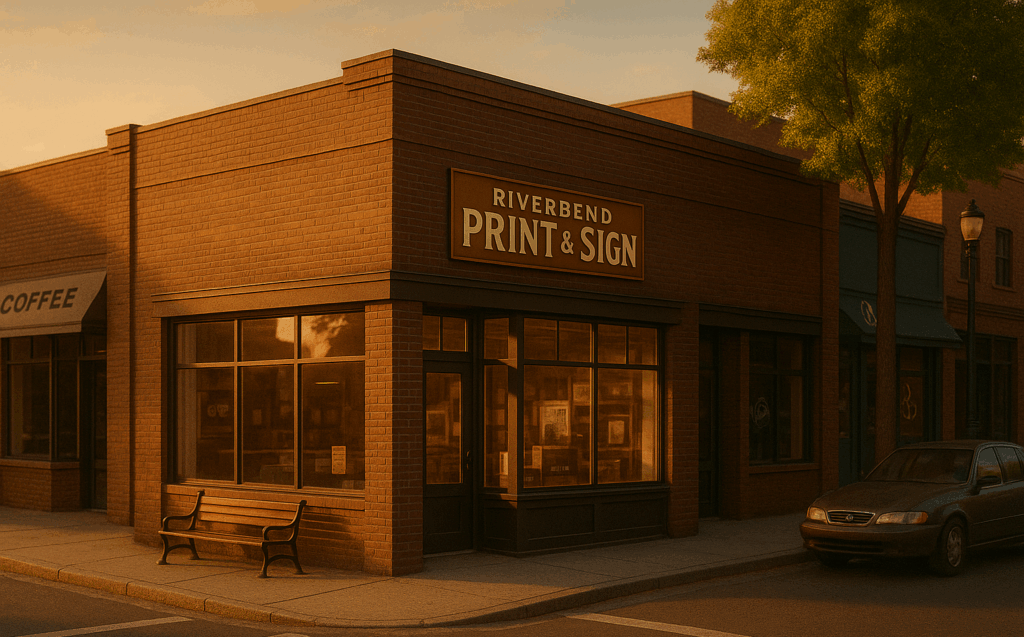
When I shared Clay’s story last month, I described him as fictional but built from real conversations with printers just like you. That’s still true. Clay’s not here to tell you what to do. He’s here to help you see what’s possible. And I’m here to walk with you as you figure out what your own AI journey might look like at your own pace, one step at a time. This month, we check in on Clay as something begins to shift. His shop is steady. His people are solid. But deep down, he’s wondering: What happened to the spark? Same Shop, Different Feeling Monday morning at Riverbend Print & Sign looked exactly the same as it had for years. Clay Morgan walked into his main location at 7:58 a.m., coffee in hand, phone already buzzing. Jess from the front desk gave him a quick update on the delayed install at McKenzie Automotive. Production had run into a material issue, but the customer was still “fine with it.” Over at the cutter, his lead tech asked about reprinting a seasonal banner they’d done last year. “Check the archive, it’s probably there,” Clay said, half-turned toward his screen. It was all normal.
The AI Wake-Up Call: Part 1 of the AI Success Journey For Printers
AI Didn’t Just Change My Mind, It Refocused My Mission When I first got serious about exploring AI, I looked at it through the lens I knew best: marketing. How could it help us produce better, more effective content for printers? That seemed like the right-sized question to ask. But I quickly discovered I was thinking too small. What started as a marketing experiment became something much more. The deeper I went, the more I realized that AI wasn’t just another content tool, it was a business tool. One that could reshape operations, communication, decision-making, hiring, forecasting. I wasn’t looking for a shift in my professional identity, but I found myself re-energized by what I was learning. AI didn’t overwhelm or distract me; AI refocused me. That shift didn’t move me away from the work I’ve always done with printers. It brought me closer to it with more precision and sharper alignment with our mission: to help printers sell more printing. The industry I care about is entering a new chapter, and I want to help printers step into it with clarity, confidence, and control. Which brings me to someone I’d like you to meet. Meet Clay Morgan Clay Morgan
The MI4P Process
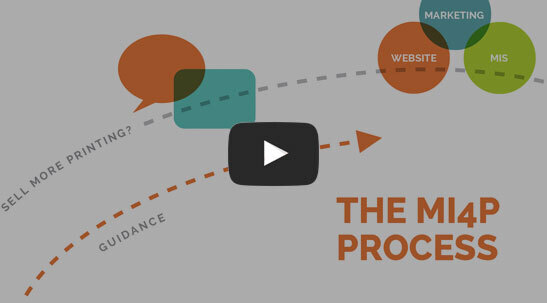
This two-minute video will show you how we take you through Our Proven Process. No surprises; no bumps in the road!
It's worked for hundreds of printers just like you; it will work for you, too! Download the MI4P Proven Process PDF below, and follow along.
PDF: The MI4P ProcessSay Hello
"*" indicates required fields
Who We Are
What We Do
Marketing Ideas For Printers
5990 14th Street South
Fargo, ND 58104
(701) 241-9204 (800) 736-0688
© 2026 Marketing Ideas For Printers
Our Privacy Policy | Terms of Service