Stepping Back to See the Whole Picture
Over the last several months, we’ve followed Clay Morgan from the moment AI first caught his attention to the day it became part of his shop’s everyday rhythm. Along the way, he went from experimenting in quiet moments to equipping his team with repeatable workflows. He discovered that AI isn’t just a tool for speed; it’s a catalyst for clarity, connection, and leadership.
Now, Clay pauses to reflect. And the view looks different from here.
A Quiet Evening in the Shop
The lights were still on, but the shop had gone still.
Jess had left early to take her son to a school event. Rick had closed up the delivery van an hour ago. Even the presses, freshly cleaned and reset for Monday, sat in patient silence.
Clay walked the floor slowly, letting himself notice what he might usually overlook.
There was the production schedule pinned on the back wall, a layout that had started as a rough AI-generated draft before Rick made it his own.
A stack of reorder notes sat neatly on Jess’s desk. Some of the emails had come from an AI workflow they’d created weeks ago, now running quietly in the background.
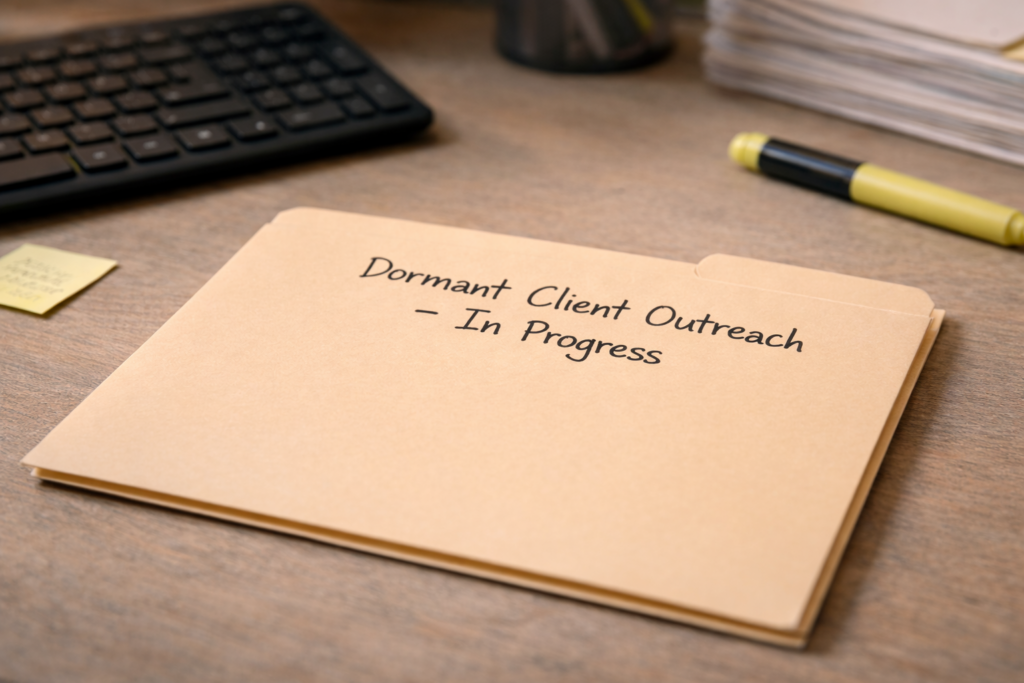
And next to the printer, a manila folder marked “Dormant Client Outreach – In Progress.”
Nothing looked dramatic. But everything felt more intentional.
A Note to His Future Self
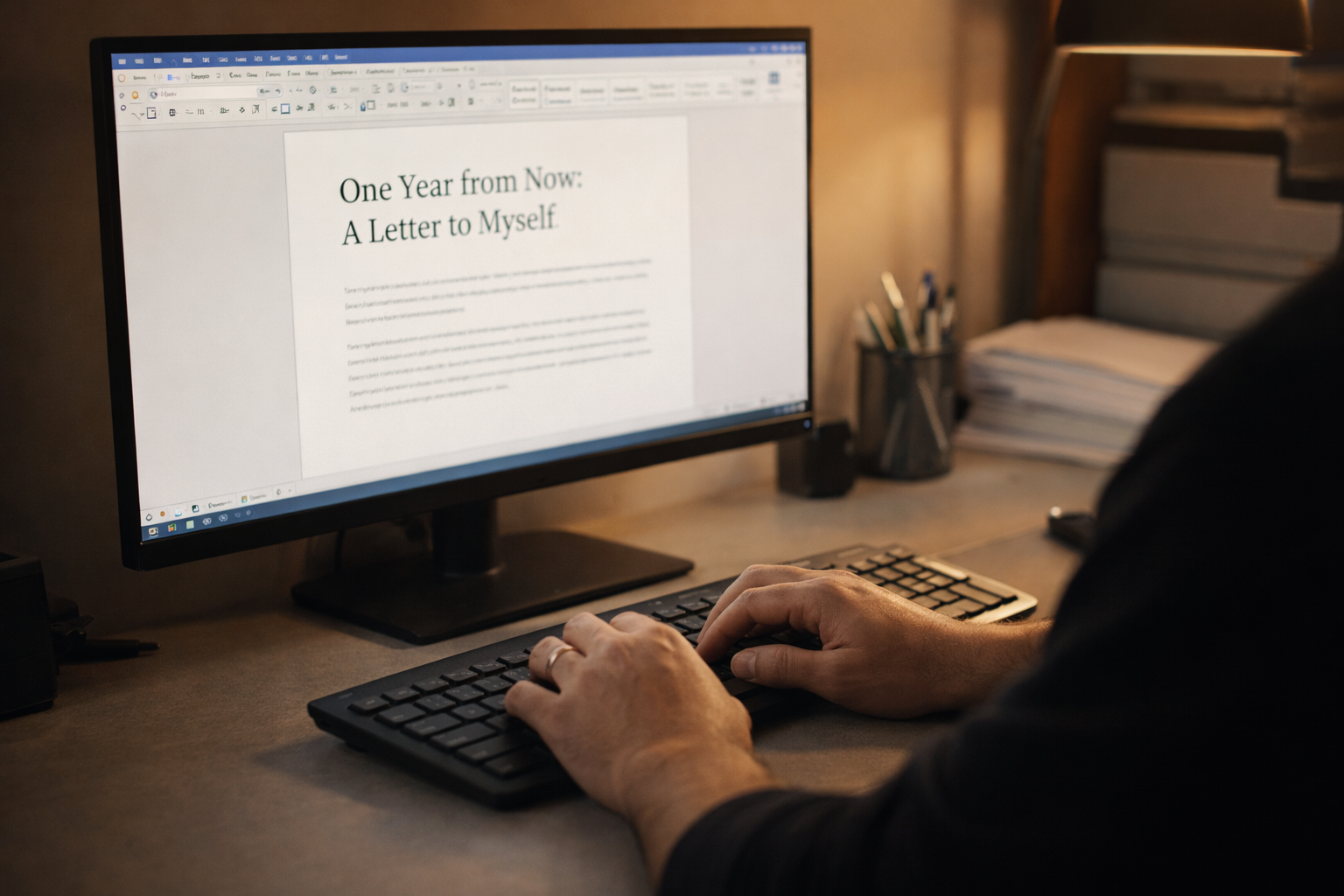
Clay stepped into his office and opened a blank document. No deadlines. No task list. Just space to think.
He titled it:
“One Year from Now: A Letter to Myself”
He started typing.
“Did we keep learning? Did we stay curious? Did we bring our people along with us?”
He let the questions hang for a moment, then continued:
“This year, we didn’t just use AI. We tested, we adapted, we reconnected with customers we hadn’t heard from in months. We stopped reacting to every request like it was a fire drill. We got a little smarter. And we created workflows that gave us space to breathe.”
He thought about Rick’s early resistance. The way Jess had quietly experimented behind the scenes. The small breakthroughs that never made it into team meetings but shaped the culture anyway.
“We didn’t automate our humanity,” he typed. “We sharpened it.”
Still More to Learn
Clay sat back and thought about the months ahead.
AI wasn’t done evolving. He knew that. New platforms, new use cases, new risks, it was all coming.
But the biggest shift hadn’t been technical. It had been cultural.
“If we stay grounded in who we are,” he wrote, “we don’t have to fear what’s next.”
AI would change.
The work would keep moving.
But Clay’s team had built something stronger than a process: a mindset of growth.
The View From Here
From the outside, nothing radical had happened.
Clay hadn’t launched a new division. He didn’t rebrand his business or hire a Chief AI Officer. He didn’t post graphs about productivity on LinkedIn.
But inside the shop?
Inside the culture?
Things had shifted.
- Production ran with more clarity
- Customers were coming back
- His team spoke up more and got stuck less
- They were making faster, better decisions with less mental drag
Most of all, Clay was leading again and not just managing.
He didn’t feel like a technician trying to keep up with trends.
He felt like a business owner building for what’s next.

What Printers Need Now
Printers don’t need to become AI experts.
They need to become AI-ready leaders.
That means:
- Knowing how to spot repeatable work and turn it into an AI workflow
- Inviting your team into small tests
- Asking better questions about customers, timing, and opportunity
- Keeping your culture rooted in trust, not fear
You don’t have to automate everything.
But you do have to stay in motion.
Why Early Movers Win
The future of print will belong to the early movers. These aren’t the flashiest adopters, but the thoughtful ones.
The ones who:
- Make time to experiment, even when it’s not urgent
- Share what they’re learning with their team
- Use AI not to replace people, but to equip them
Early movers aren’t the ones chasing hype.
They’re the ones building margin. Making room. Moving with intention.
That’s what Clay did.
And that’s what any printer can do.
The End of the Beginning
Clay closed his laptop and turned off the lights.
The shop was quiet again.
But something had changed.
He didn’t feel like he was “done” with AI.
He felt like he was finally ready.